
The recruitment industry is ever-evolving now that businesses are attempting to do a better selection, evaluation, and hiring of the best talent. For decades, resumes, the age-old portrait of the candidate’s education, experience, and skills, for decades, were the standard model for judging prospects.
However, with the ever-increasing competition and sophistication that comes with the hiring process, the fallibility of resumes is becoming ever clearer.
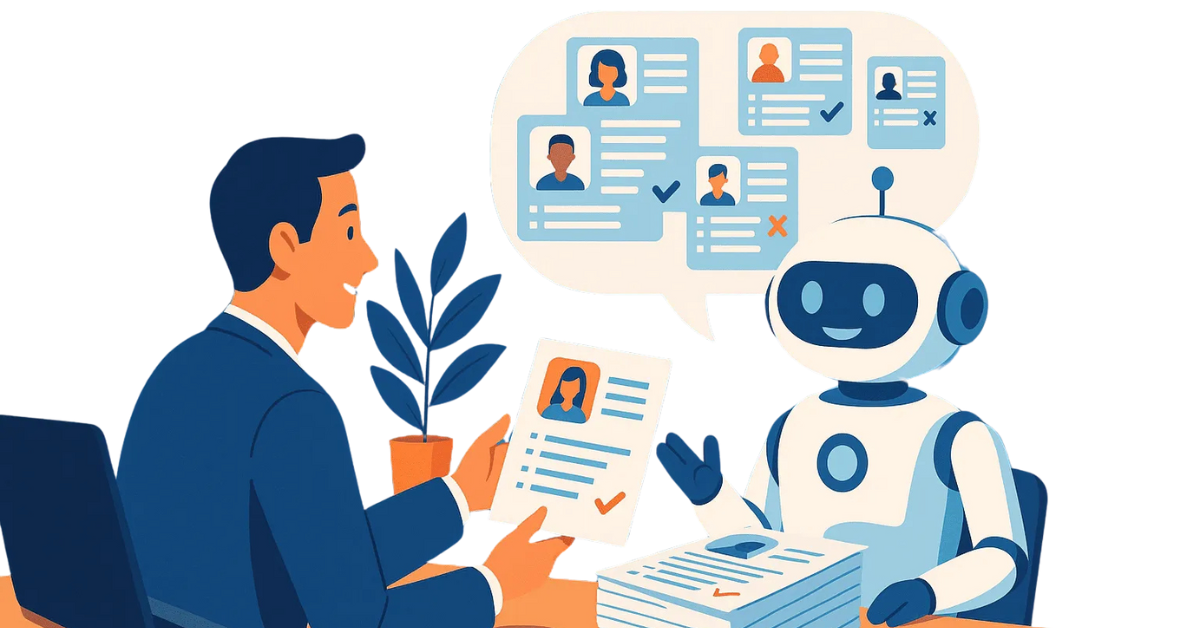
To this end, pre-interviews with AI became an indispensable tool that can yield further, practical information regarding candidates than ever before served by resumes.
The reform is making for an entirely new criterion for candidate assessment and is upending the methodology with which organisations go about searching for talent.
The Limits of Resumes in Contemporary Recruitment
Resumes were the linchpin of candidate winnowing for decades, but the process is necessarily incomplete in structure. The resume is an immovable piece of paper—tailor-made to match specific requirements for the job and even at times fabricated to highlight the candidate’s strengths.
Although resumes give a glance at credentials, they are superficial in some essential areas:
- Lack of Context: The resumes list skills and experience but never clarify how the skills were applied or the impact the output made to the candidate.
- Subjectivity and Bias: Applicants using the services of professional resume preparers or learning to brag about themselves may appear stronger than equally qualified peers.
- Inability to Assess Soft Skills: Resumes do not reveal skills that are latent, problem-solving, adaptive, or cultural fit.
- Obsolete Data: Resumes from fast-paced sectors are likely to contain outdated achievements or adaptive skills.
- Volunteer Overload: Recruitment managers end up wading through scores of volunteer applications for an event, swamping the process.
These weaknesses are indicative that there is a need for a more objective, comprehensive, and dynamic evaluation process, which gets to the depth.
Preparations for Interviews with the Strength of AI
Pre-interviews that are AI-based engage the applicants in very tightly structured, simulation-style tests that simulate genuine problems and behaviour for the job. They are characterised by:
- Automated Question Construction: Computer programmes construct individualised inquiries concerning job functions and essential competencies.
- Real-Time Analysis: Online assessment is done for candidates’ replies, judging communication skills, confidence, and problem-solving orientation.
- Objective Scoring: The system minimises subjectivity to the bare minimum through objective grading with standardised norms.
- Scalability: Such systems are able to screen hundreds or thousands of candidates at once.
- Actionable Insights: Detailed reports summarise strengths, weaknesses, and red flags, allowing recruiters to make confident hiring decisions.
With these capabilities, AI Platforms give a much richer perspective of each rival than is possible from the typical resume.
Further Insight with Real-Time Evaluation
Pre-interviews with AI deliver some of the strengths of this technology, including the fact that real-time performance data can be captured. Preceding resumes, or self-certified, static resumes, these interviews require the candidate to showcase competencies and skills proactively.
Benefits are:
- Legitimate Responses: Real-time evaluation measures what test-takers think, speak, and solve, providing a better skills representation.
- Analysis of Behaviour: The system picks up tone, body movements, and patterns of response to reveal personality, confidence, and cultural match.
- Validation of Skill: Technical and situational tests validate whether the stated skills are real or not.
- Consistency: The same candidate is tested under the same circumstances, promoting equity and accuracy.
Growing Diversity and Reducing Bias
Unconscious bias is a perennial antagonist of the hiring process. Resumes practically shine light, illuminating aspects, such as names, degrees, or gaps in employment, that appeal to subjective decisions.
AI-powered pre-interviews, however, focus solely on objective performance metrics. By masking personal data and analysing responses purely on job-relevant criteria, platforms like IntervueBox help mitigate demographic bias.
This guarantees that all the candidates are evaluated meritoriously, with skills and merit being the determinants, thus encouraging diversity and inclusivity for organisations.
Bolstering the Candidate Experience
A positive candidate experience is paramount to attracting the best and brightest. Resume screening, an antiquated way to screen candidates, leaves applicants dangling, causing suspicion and disengagement.
Pre-recorded video interviews with robots, however, are clear and interactive.
- Instant Feedback: Applicants receive immediate insights into their performance, helping them identify areas for improvement.
- Convenience: Online interviews are accessible at any time, without scheduling issues.
- Customisation: The system personalises questions and scenarios to the individual candidate and particular role, rendering the process more relevant.
This smooth and convenient process enhances employer branding and retains top talent amid the process.
Taking Data-Based Decisions
Pre-interviews with AI produce mountains of data underlying wiser hiring decisions. Recruitment and hiring managers are able to utilise these results to:
- Compare Candidates Impartially: Standard scores facilitate easy comparison among applicants.
- Identify Trends in Recruitment: Aggregate figures expose talent tendencies, areas of strength, and recruitment results for future forecasting.
- Foresee Success at Work: Predictive analytics can also predict the potential for success at the job, reducing poor hires.
Through this fact-based process, recruitment is taken from the art form that it is too often reduced to science.
Scalability and Efficiency
As companies grow, traditional resume screening becomes inefficient. AI Recruitment Platform address this by automating early-stage evaluations and allowing recruiters to focus on top prospects.
Major advantages are:
- Bulk Recruitment: The system is capable of handling mass recruitments efficiently.
- Smaller Time-to-Hire: Simplified assessments help expedite decisions, preventing candidate loss.
- Optimised Resources: Time spent on manual screening is less, and recruiters can interact more with shortlisted candidates.
It facilitates this automation to support recruitment that is quicker, more standardised, and compliant with current business requirements.
Real-World Applications and Success Stories
Pre-interviews are now being deployed with the help of Artificial Intelligence, industry-wise—call centres, corporates, healthcare, and beyond.
For example:
- IT corporations utilise programming tests with AI to screen good developers fast.
- Customer service units give situation tests for empathy, communication, and problem-solving.
These illustrations prove how effective and versatile AI-driven tests are to discover top-performing potential.
The Future of Candidate Evaluation
The transition from filtering resumes to computer-controlled pre-interviews marks the end of an outdated recruitment era. With continuous improvements, AI assessment technology will further evolve through:
- Increased Natural Language Processing: Enhanced comprehension of sentiment, tone, and intent behind the reply.
- Video and Emotion Analysis: Advanced interpretation of the body and emotional intelligence.
- Models for Continuous Learning: Systems that fine-tune accuracy through continuous feedback and performance results.
These innovations will make candidate assessment more accurate, fair, and efficient—establishing a new standard for recruitment excellence.
Conclusion
Preflections with machines are more descriptive and pragmatic than classical resumes. They test real-time competencies, reduce discrimination, elevate the candidate experience, and help recruiters make evidence-based decisions.
With the competitive talent landscape now, implementing AI Platforms such as IntervueBox is not an option anymore. Building high-performing teams and upgrading recruitment strategies is now mandatory. Come to IntervueBox now and find out how AI-based pre-interviews can change your recruitment process.